

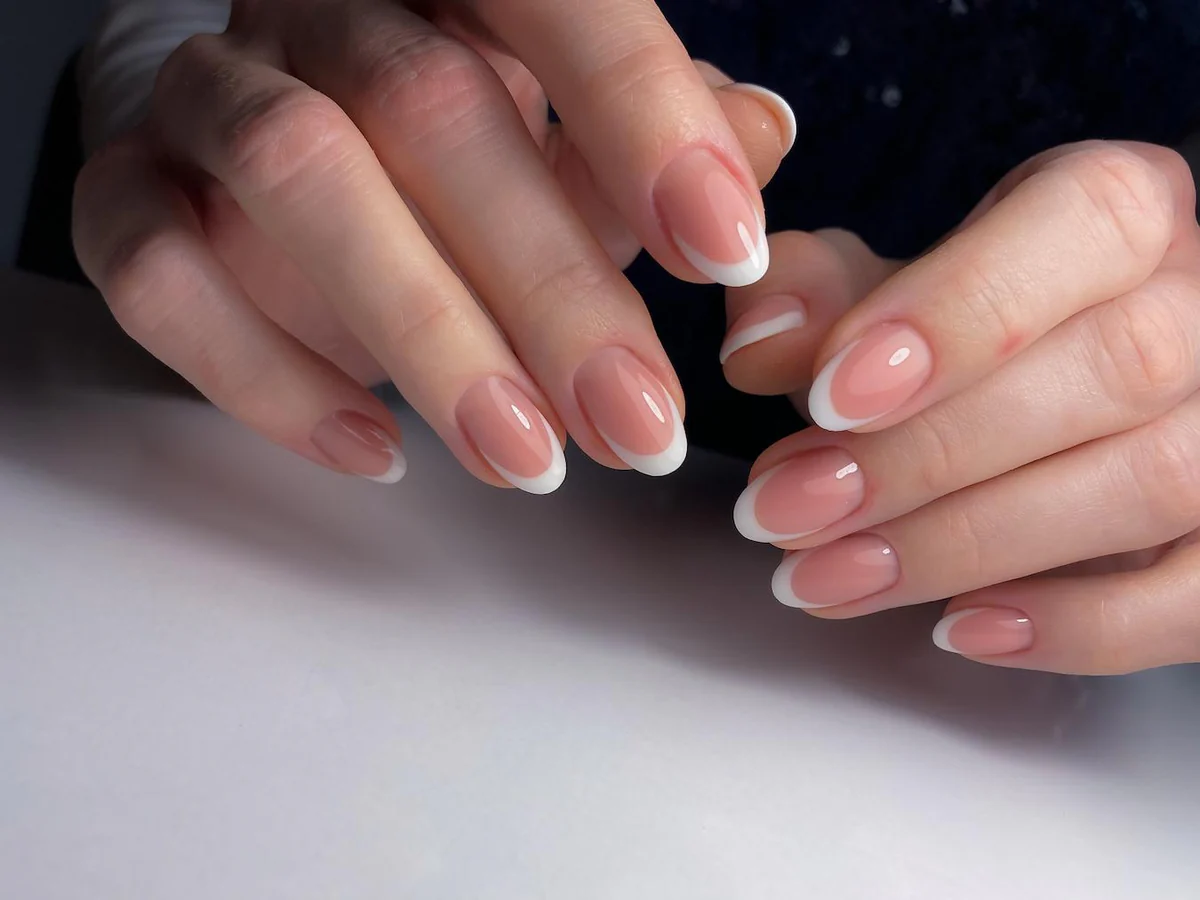
If you love Classy Short French Nails of a French manicure but hate the “too long, too loud” vibe that sometimes comes with it, you’re in the right place. Classy short French nails hit that rare sweet spot: polished enough for a wedding in London, practical enough for a commute in New York, and subtle enough for a Monday meeting in Manchester or a client lunch in California.
Here’s what most people don’t realise: the “classy” part isn’t about expensive salons or super-skilled nail art—it’s about proportion. On short nails, the tip has to be thinner, the base has to be softer, and the shape has to match your natural nail. When those three things line up, the manicure looks clean, intentional, and quietly luxe—even if you did it at home.
Below, you’ll get modern design ideas, the exact shapes and colours/colours that flatter short nails, what to ask for at the salon (US + UK friendly), and how to make your French last 10–14 days without that dreaded chipped edge.
Why classy short French nails are trending (and why they flatter almost everyone)
French manicures never truly disappear—they just get reinvented. Right now, the shift is toward shorter, more natural-looking sets with ultra-thin tips, sheer bases, and “your nails but better” finishes. Scroll Instagram or TikTok for 30 seconds and you’ll see it: micro tips, milky bases, soft pinks, and minimal lines.
There are a few reasons classy short French nails are dominating in both the USA and the UK:
- They’re workplace-safe (even in conservative offices). A short French reads “groomed,” not “dramatic.”
- They photograph well without stealing attention from jewellery, outfits, or engagement rings.
- They’re lower maintenance. Short nails snag less, crack less, and still look neat when they grow out.
- They suit every age and style. Whether you’re into quiet luxury, clean girl beauty, or classic glam, there’s a short French that fits.
Nail techs in busy cities (think London, Birmingham, NYC, Austin) often report that neutral manicures dominate appointment books—because clients want nails that work for everything: travel, work, weekends, and events. A short French is basically the manicure equivalent of a crisp white shirt: it goes with every look.
The truth is: short nails look more expensive when the finish is pristine. A neat cuticle line and a thin, crisp tip can look more high-end than long extensions with heavy designs.
The “classy” formula: shape + length + tip thickness (this is where most people get it wrong)
If your French manicure has ever looked a bit… off… it’s usually not the colour. It’s the geometry.
1) Pick a short shape that makes the hand look longer
For short nails, these shapes consistently look refined:
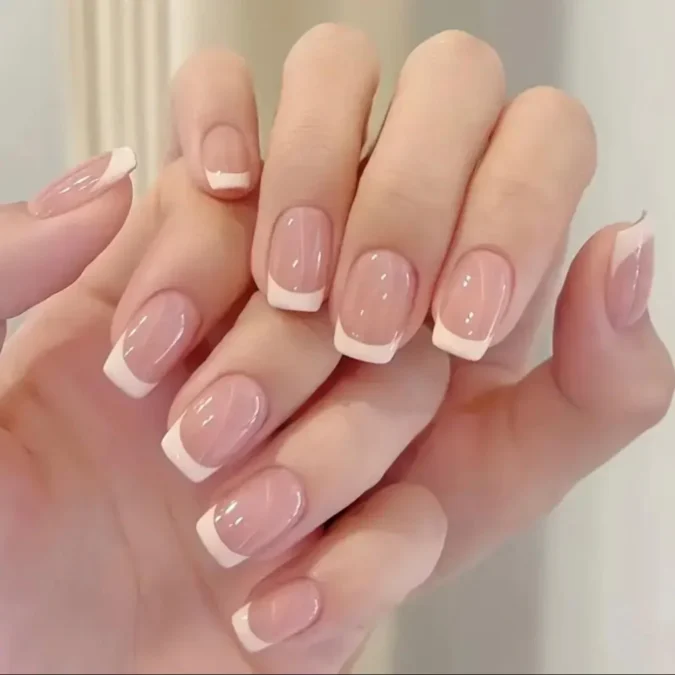
- Squoval (square-oval): the easiest “classy” option; clean edges without harsh corners
- Soft square: modern and tidy; ideal if you type a lot
- Short oval: subtly elongates fingers; very natural
- Short almond: only works if you have enough free edge; elegant, but can turn “claw-ish” if too pointy
Pro tip: If you’re unsure, ask for squoval. It’s the safest bet for classy short French nails in both natural and gel finishes.
2) Define “short” the way nail techs do
Short usually means 0–3 mm of free edge (the white part past your fingertip). That length:
- holds a tip line cleanly
- avoids breakage
- still allows a flattering shape
3) Keep the tip thin—thinner than you think
On short nails, thick white tips can make the nail plate look smaller. The more “expensive” look is usually:
- micro French (1–2 mm tip)
- or a soft curved smile line that mirrors your cuticle shape
If you remember only one thing: short nail = short tip.
The best base colours for classy short French nails (and when to choose each)
The base shade is the difference between “basic Classy Short French Nails” and “elevated French.”
Sheer pink (timeless)
- Great for weddings, interviews, and everyday
- Works across skin tones when matched correctly
- Looks clean even as it grows out
Milky nude (modern “quiet luxury”)
- The #1 upgrade if you want the manicure to look pricey
- Softens imperfections and makes the tip look smoother
Beige nude (polished and warm)
- Gorgeous with gold jewellery
- Ideal for autumn wardrobes in the UK, and year-round neutrals in the US
Cool-toned nude (sleek and editorial)
- Looks amazing with silver jewellery and grey/black outfits
- Particularly chic in winter
Salon language that helps: Ask for a “sheer milky base” instead of an opaque nude. It gives that glassy, fresh finish people associate with high-end salons in London and New York.
12 classy short French nail ideas that look expensive (without being loud)
If you want inspiration that works in real life—typing, errands, travel, weddings—start here. These are modern takes that keep the vibe refined.
1) The Micro French (the ultimate classy short look)
A barely-there white line on a sheer pink base. It’s minimal, crisp, and suits everyone.
Best for: first-time French wearers, office-friendly nails, understated elegance.
2) Milky French (soft-focus, luxury finish)
Milky nude base + thin white tip. The slightly clouded base hides ridges and gives “expensive manicure” energy.
Best for: engagement photos, events, and anyone who hates harsh contrast.
3) Baby French with rounded smile line
Instead of a sharp straight tip, the white curves gently—more flattering on short nails.
Best for: short oval or squoval shapes.
4) “Cashmere” French (nude-on-nude)
Swap the white tip for a slightly lighter nude. It reads French, but only up close.
Best for: corporate settings, minimalist style, quiet luxury wardrobes.
5) Glazed French (subtle chrome, not disco)
Keep a classic French, then add a sheer pearl chrome on top. It catches light beautifully without screaming “sparkle.”
Best for: holiday parties, dinners, bridal looks.
6) Soft coloured/colored tip French (barely tinted)
Pastel tips (think blush, baby blue, soft lilac) on a sheer base. The key is muted colour.
Best for: spring/summer in California, weddings, brunches in London.
7) Navy or espresso micro tips (the chic alternative to black)
A deep navy or brown tip looks sophisticated and wearable—more “designer handbag” than edgy.
Best for: autumn/winter, darker wardrobes, short square nails.
8) Side French (modern, elongating)
Instead of a classic tip, the line sweeps diagonally along one side. On short nails it can make fingers look longer.
Best for: fashion-forward but still classy.
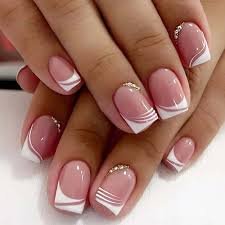
9) Double-line French (thin + thinner)
Two ultra-thin lines at the tip—usually white + gold, or white + nude.
Best for: special occasions when you want detail without bulk.
10) Matte base + glossy tip (texture contrast)
A velvety nude base with a shiny white micro tip feels editorial and clean.
Best for: people who want “different,” not “busy.”
11) French fade (ombre tip)
A soft gradient from nude into white—no harsh line. One of the most forgiving options for DIY too.
Best for: chipped-tip anxiety, low-maintenance wear.
12) Tiny accent French (one nail only)
Classic French on all nails, but add a micro pearl or a single delicate line on one ring finger.
Best for: bridesmaids, events, anyone who wants “just enough.”
If you’re saving ideas, build a quick board on Pinterest, or screenshot looks on Instagram and TikTok. For salons: US clients often use Yelp and Booksy; UK clients frequently use Treatwell. Bring 2–3 reference photos so your tech can match the tip thickness and base sheerness.
Salon vs at-home: how to get classy short French nails without messy edges
A French manicure is deceptively hard. On short nails, every tiny wobble shows—so your approach matters.
What to ask for at the salon (works in the US + UK)
When booking or sitting down, be specific:
- “Short squoval/oval, please—keep the length practical.”
- “Sheer milky nude base, not opaque.”
- “Micro French tips—very thin.”
- “Can you match the smile line to my cuticle curve?”
- “Finish with a high-gloss top coat and cap the free edge.”
Mini case example:
A client in Birmingham who types all day will often do better with BIAB + micro tips (strong, flexible, natural-looking). A client in Texas who’s outdoors a lot may prefer hard gel or gel polish with careful edge-capping to reduce chipping in heat and activity.
How to DIY a clean French on short nails (step-by-step)
DIY can look salon-level if you simplify:
- Prep matters more than polish. Push back cuticles gently, remove shine lightly, cleanse with alcohol.
- Use a sheer base. One thin coat, then a second if needed. Avoid thick layers.
- Create the tip with a detail brush (not the bottle brush).
- Use the “guide dot” method: place 3 tiny dots across the tip, then connect them in a smooth curve.
- Clean lines with a small brush + remover before curing (gel) or before top coat (regular).
- Top coat and cap the edge to seal the tip.
Tools that help: striping brush, clean-up brush, French tip stickers (for beginners), a good top coat. For gel: a reliable lamp matters—under-curing causes lifting and dullness.
Gel, BIAB, acrylic, or press-ons: what’s best for short French tips?
Choosing the right system can make your manicure look classier and last longer.
Regular polish (cheap and easy)
- Best for: quick changes, low commitment
- Downside: tips chip faster (often 3–7 days)
Gel polish (the most popular all-rounder)
- Best for: glossy finish, 10–14 day wear
- Works well for: classy short French nails with crisp micro tips
- Downside: removal needs patience to avoid nail damage
BIAB / Builder gel in a bottle (especially popular in the UK)
BIAB is loved across the UK (London and Manchester salons offer it everywhere now) because it adds strength without bulky extensions.
- Best for: weak nails, peeling nails, growing your natural nails
- Look: ultra-natural and “expensive”
Hard gel (durable, sleek)
- Best for: durability, high shine, strength
- Great for: active lifestyles, frequent hand washing
Acrylic (not always necessary for short nails)
- Best for: major length changes or dramatic reshaping
- For short French: can be overkill unless you need structure
Press-ons (the underrated quick fix)
High-quality press-ons can look shockingly real if you choose a short, natural shape.
- Best for: events, travel, last-minute plans
- Pro tip: file the cuticle edge thinner so it melts into the nail
Realistic cost expectations (US + UK)
Prices vary by city and salon tier, but typical ranges:
- Basic French gel manicure: $45–$85 (US) / £35–£65 (UK)
- BIAB with French tip: $65–$110 / £45–£80
- Luxury/central locations (NYC, London): often higher due to rent and demand
If you’re in New York or London, you’re often paying for speed + consistency. In smaller cities (like Birmingham or parts of Texas), you may get more time and detail for the price—so it’s worth asking how long the appointment slot is.
How to make your short French manicure last 10–14 days (without tip wear)
French tips show wear faster because the edge is highlighted. This is how you keep them crisp.
Do these 7 things:
- Ask your tech to cap the free edge (this seals the tip).
- Use cuticle oil daily—especially after hand washing.
- Wear gloves for cleaning (dish soap is brutal on top coat).
- Avoid using nails as tools (opening cans, scraping labels).
- Choose a slightly off-white tip if you’re hard on your hands—bright white shows chips more.
- Re-topcoat at day 5–7 (regular polish wearers).
- File snags immediately—don’t wait for a tear.
Pro tip: If you’re travelling (say, a work trip from London to New York), pack a mini cuticle oil pen and a tiny file. Two minutes of maintenance saves the whole set.
Mistakes that ruin classy short French nails (and the quick fixes)
A French manicure can go from elegant to awkward fast. Here are the common issues—and what to do instead.
Mistake 1: Tips that are too thick
Fix: Switch to a micro tip or a soft ombre French fade. Ask for “1–2 mm” tips.
Mistake 2: Stark white with an opaque base
On short nails, this can look harsh.
Fix: Choose a sheer milky base or a slightly softened white (cream/off-white).
Mistake 3: Wrong shape for your nail beds
Short wide nail beds can look wider with a hard square.
Fix: Try squoval or short oval to elongate.
Mistake 4: Uneven smile lines (especially on thumbs)
Fix: Ask your tech to paint thumbs last; for DIY, use the dot method and clean-up brush.
Mistake 5: Over-embellishing
Rhinestones, heavy glitter, and thick art can fight the “classy” goal.
Fix: Keep accents to one nail, one line, or one tiny gem per hand—max.
Here’s what most people don’t realise: “classy” doesn’t mean “boring.” It means the details are controlled.
FAQ: Classy short French nails (US + UK queries)
1) What are the most popular classy short French nail designs right now?
Micro French tips, milky French, and French fade/ombre are the top picks because they look clean, modern, and suit short lengths.
2) How short can nails be and still look good with a French tip?
You can go very short—around 0–2 mm free edge—as long as the tip is ultra-thin and the base is sheer. If there’s no free edge at all, a French fade may look more natural than a hard tip line.
3) Are classy short French nails better in gel or regular polish?
Gel usually looks sharper for longer (often 10–14 days). Regular polish is fine if you don’t mind touch-ups and prefer easy removal.
4) What should I ask for to get “micro French tips” at a salon?
Say: “Sheer milky base and micro French tips—very thin, about 1–2 mm—short squoval shape, please.”
5) Is BIAB good for short French manicures?
Yes—BIAB is excellent if your nails bend, peel, or break. It adds strength while keeping a natural look, which is why it’s so popular in UK salons (and increasingly common in US cities too).
6) How much do short French tip nails cost in the US and the UK?
Typical ranges are $45–$85 in the US and £35–£65 in the UK for a French gel manicure, with BIAB and premium locations costing more.
7) How do I stop French tips from chipping on short nails?
Cap the free edge, keep layers thin, oil your cuticles daily, wear gloves for cleaning, and avoid using nails as tools. Tip wear is usually a sealing problem, not a “bad polish” problem.
The takeaway: the cleanest manicure you can wear (with almost zero risk)
If you want nails that look put-together in every setting—work, weddings, travel, weekends—classy short French nails are hard to beat. They’re timeless, but right now they’re also on trend thanks to micro tips, milky bases, and softer smile lines that feel modern in both the US and the UK.
Pick a flattering short shape (squoval is the safe winner), keep the base sheer, and go thinner on the tip than your instincts suggest. Whether you book a BIAB appointment in London, a gel manicure in New York, or DIY at home before a last-minute event, the “expensive” look comes down to precision and proportion.
Want the fastest win? Save three reference photos, then book a longer slot and ask specifically for a micro French with a milky base. Do that once, and you’ll understand why so many people never go back.
